01 / Independent product
Bokkeh
From finding a photographer to booking a session.
Problem
A photographer’s booking takes more than a portfolio: the client has to understand the offer, book and pay, and later receive the gallery.
My part
The public sales funnel and landing page, demo vendor experiences, portfolio presentation, the R2 gallery storage migration and a broader interface restyle.
The hard part
CHIP payments and the WhatsApp AI booking bot are distinct integration boundaries, each with its own state and failure cases.
One place around the booking
A photographer’s work is visual, but arranging a session involves much more than a portfolio. A prospective client needs to understand the offer, make a booking and pay. After the session, the photographer needs a way to deliver the gallery.
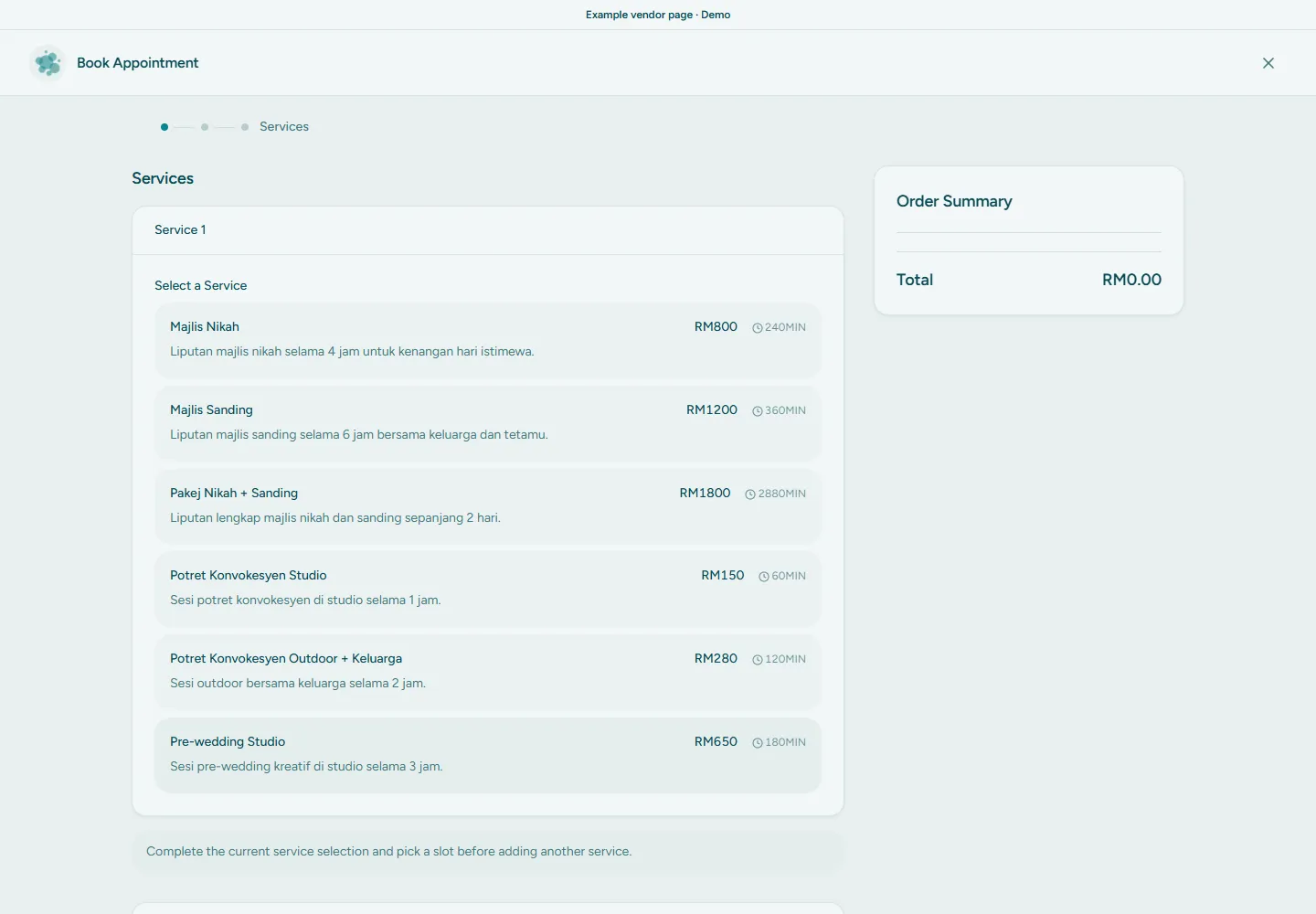
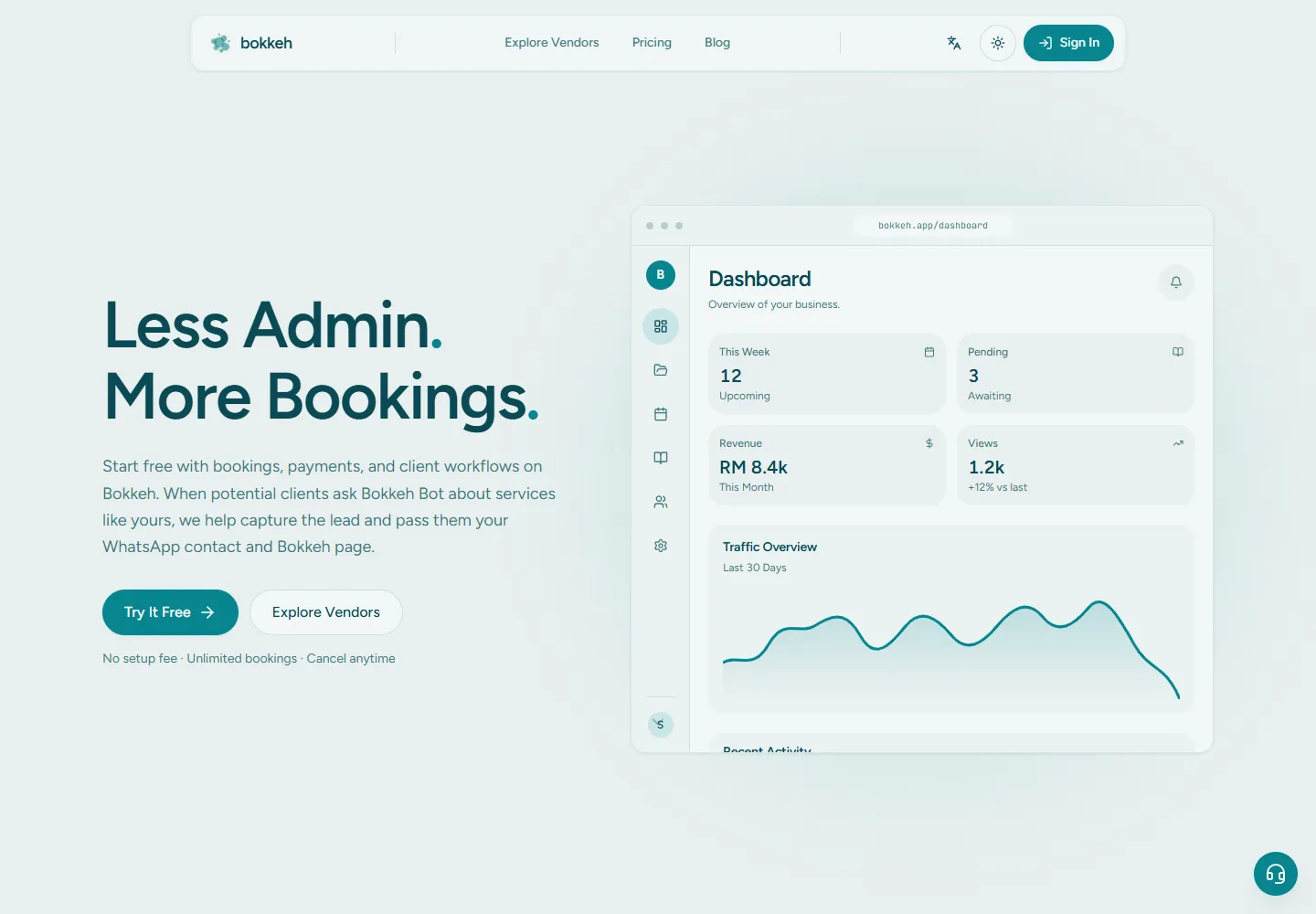
Bokkeh brings those connected tasks into a platform for photographers and studios. It combines vendor portfolio pages, a booking flow, payment integration and client galleries. The product work spans both the public experience that introduces a vendor and the tools supporting the booking behind it.
The product takes a wider view
The public sales funnel and vendor pages are part of the product, rather than a separate marketing exercise. Work on Bokkeh has included the landing page, demo vendor experiences, portfolio presentation and a broader interface restyle. The aim is a coherent path from discovering a photographer to understanding what to book.
The platform also includes pricing plans, analytics and a blog workflow with AI-generated drafts. These sit around the core service: helping a photography business present its work and manage the next step with a client.
Galleries, storage and payments
Client galleries support Cloudflare R2 storage or Google Drive. Work on the R2 migration connects the visible gallery experience to a practical storage decision: delivering photos requires a dependable way to store and serve them, alongside the booking application.
CHIP provides the payment integration. A WhatsApp AI booking bot is another part of the product, extending booking conversations into a channel already familiar to its intended users. These are distinct integration boundaries, each with its own state and failure cases.
Engineering across the product
The application uses Next.js, Convex, Tailwind and shadcn/ui, with Cloudflare R2 for storage. The work brings together frontend presentation, application data, external integrations and the supporting commercial experience.
The useful engineering question is how each part fits into the photographer’s workflow. A gallery should connect to the service being delivered; a vendor page should lead somewhere useful; a payment should belong to a booking. That relationship between product flow and implementation is the focus of this project.
What this work demonstrates
Bokkeh shows product development across a connected service, from public discovery to post-session delivery. The work connects the presentation of a creative business with the practical systems needed to run its service.